Triage
Separate ordinary soil from stains, odor sources, damage, and conditions that need a specialist.
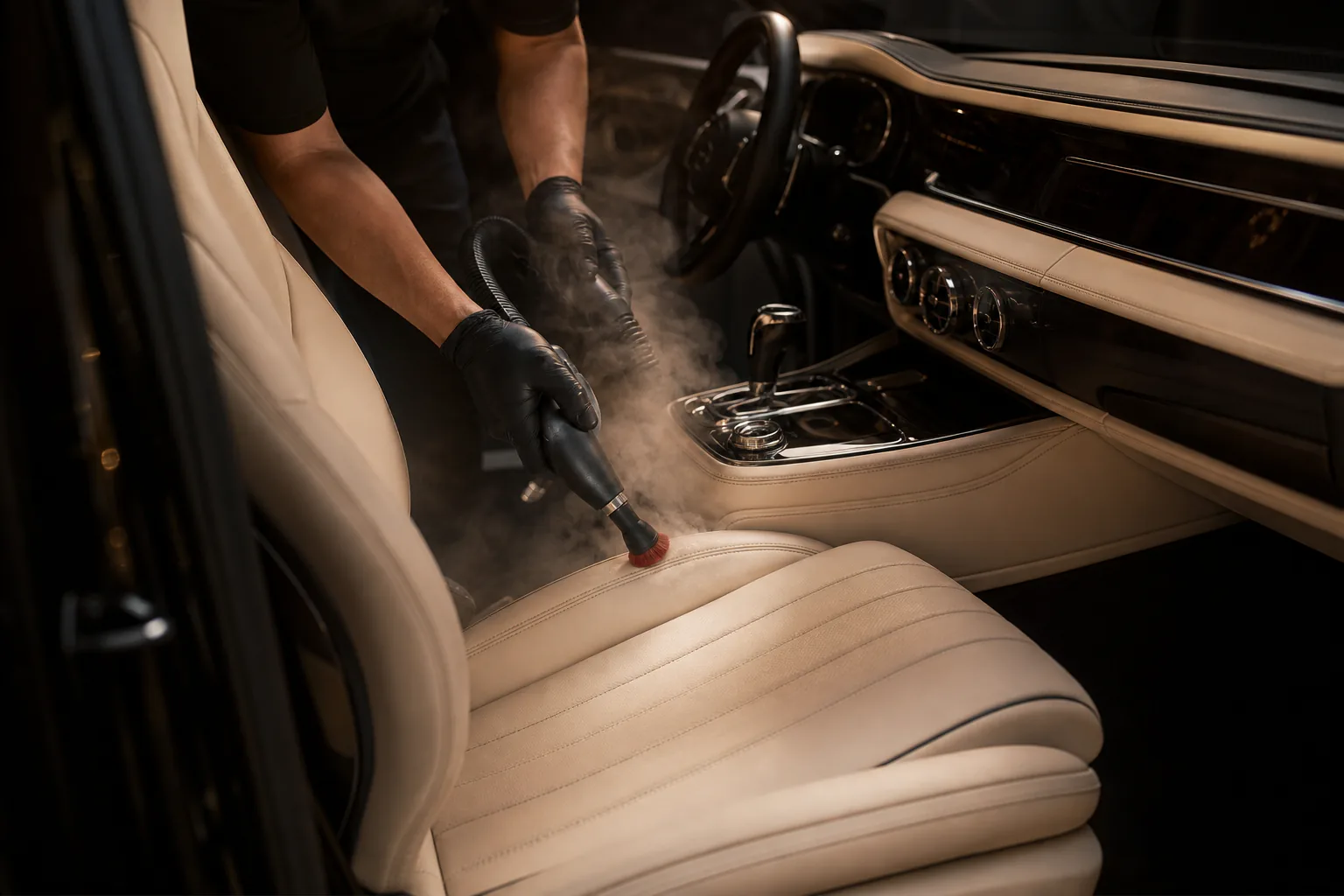
Cabin restoration · Scottsdale region
Interior detailing addresses accumulated soil, residue, dust, spills, pet hair, and uneven finish without coating every surface in artificial shine. The plan follows the materials, use, ventilation needs, and severity found inside the vehicle.
Best fit
It fits daily-driven family vehicles, enthusiast cabins preparing for sale or an event, and owners who want a clean reset before entering a maintenance rhythm. Severe contamination may require specialist remediation.
Leather, coated leather, textile, Alcantara-style materials, plastics, screens, wood, and metal respond differently. Dye transfer, old stains, embedded odor, damaged coatings, and biological contamination need separate expectations.
Purpose-specific process
Separate ordinary soil from stains, odor sources, damage, and conditions that need a specialist.
Remove loose debris from seams, tracks, carpets, controls, and storage areas before adding moisture.
Use surface-appropriate methods, controlled moisture, and repeated light passes where needed.
Check residue, ventilation, touchpoints, glass, and the owner’s priority areas before handoff.
Clear package decisions
Prices are illustrative starting points, not quotes. Vehicle size, condition, history, access, and selected options determine final scope.
Well-kept vehicles needing a thorough seasonal clean
From $275
3–5 hours
Optional: Pet-hair or targeted extraction assessment
Choose this starting pointHeavier soil, spills, pet hair, and varied surfaces
From $475 after condition review
5–8 hours
Optional: Protective treatment for selected materials
Choose this starting pointRare materials and preservation-sensitive interiors
Assessment-led proposal
Scope follows material review
Optional: Repair, dyeing, and hazardous remediation are excluded
Choose this starting pointBefore the visit
Remove valuables, documents, child seats, and loose personal items. Identify known spills, sensitive electronics, repairs, or areas you do not want disturbed.
After the visit
Allow cleaned textiles to finish drying, ventilate as advised, blot fresh spills promptly, and avoid household chemicals. A practical upkeep rhythm prevents another heavy reset.
Scottsdale-area relevance
Scottsdale heat accelerates odor and material stress, while trail dust and seasonal travel add fine soil. Studio drop-off supports ventilation and drying; selected maintenance visits can be demonstrated as mobile service in nearby communities.
Service questions
No. Age, previous chemicals, dye loss, padding contamination, and the original source affect what is safe and achievable.
The demonstrated approach favors a clean, low-sheen appearance unless the original material calls for something different.
Hard surfaces are normally ready at handoff. Extracted textiles may need additional ventilation and drying time depending on weather and material depth.
Condition-led quote