How to Protect a Corrected Finish After Professional Detailing
A practical wash, drying, contamination, and inspection plan for preserving clarity without treating paint as untouchable.
Reusable studio journal
A complete index with publication details, useful previews, service pathways, and one original long-form article on the same route.
Journal index
Fictional editorial examples demonstrate a reusable publishing foundation without adding routes or a full CMS.
A practical wash, drying, contamination, and inspection plan for preserving clarity without treating paint as untouchable.
How lighting, history, test sections, and risk areas shape a responsible recommendation.
Read the featured aftercare guideWhat coatings can change, what they cannot, and why wash technique still matters.
Read the featured aftercare guideA decision framework based on paint condition, ownership horizon, and desired upkeep.
Read the featured aftercare guideA material-aware alternative to heavy shine and one-product-fits-all cabin work.
Read the featured aftercare guideAftercare · July 18, 2026 · 7 min read
By Obsidian Studio Editorial · fictional editorial demonstration
A corrected finish is not fragile, but it is newly clear. That clarity makes good care more visible—and careless contact more obvious. The most useful aftercare plan is a repeatable one that limits friction, removes contamination early, and responds to the vehicle’s real exposure.
Follow the product-specific cure guidance provided at handoff. Avoid an early wash simply because dust appears, and do not add toppers or quick detailers before compatibility is clear. If unexpected rain or contamination reaches the vehicle during the initial period, ask for method guidance rather than rubbing the surface dry.
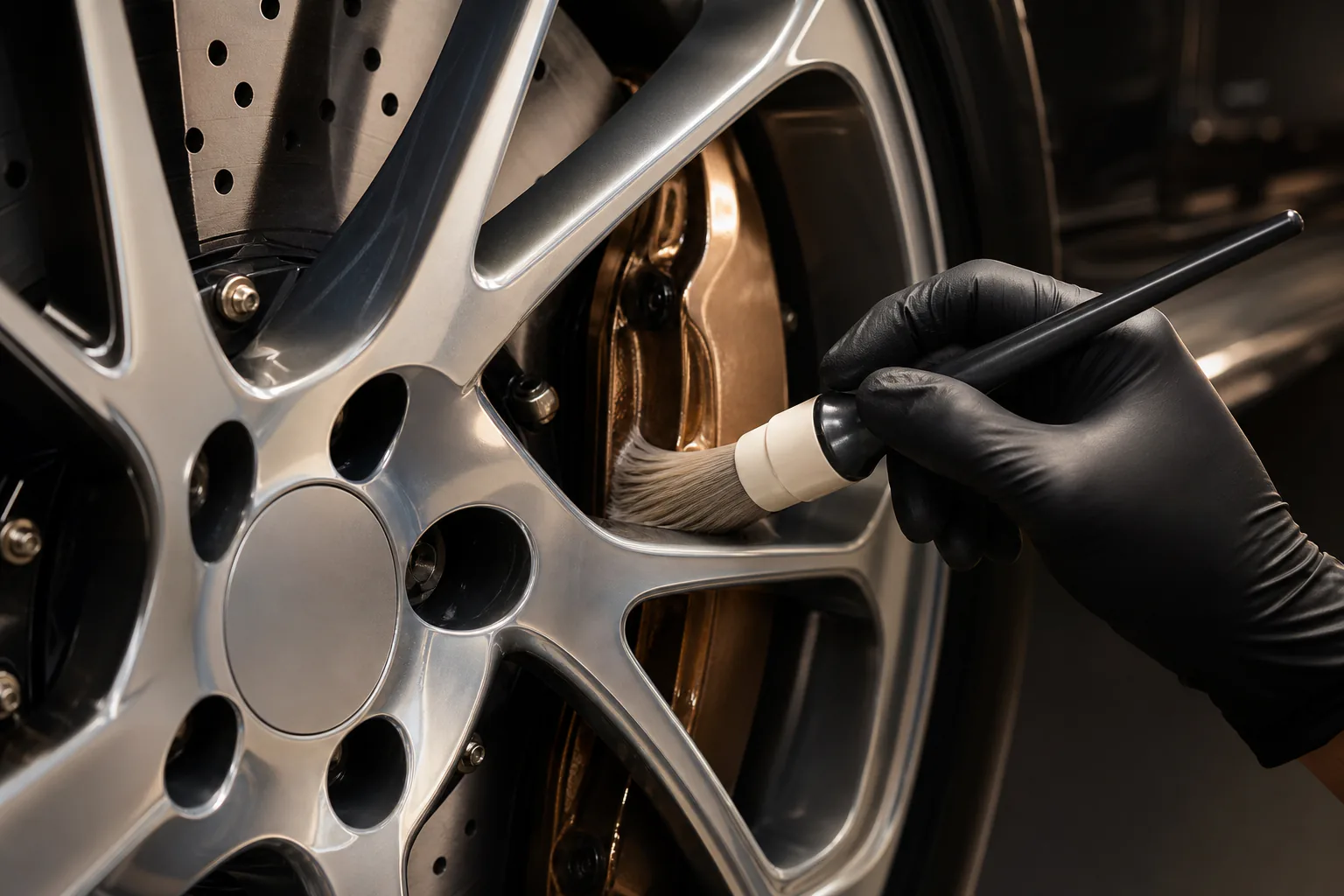
Work in shade on cool panels. Rinse loose material first, clean wheels with dedicated tools, and use clean wash media with a lubricating automotive shampoo. Move from cleaner upper areas toward dirtier lower sections. The objective is not a complicated ritual; it is avoiding the repeated dirty contact that creates wash haze.
Use clean, absorbent towels or a filtered blower where appropriate. Lay or lightly guide the towel instead of pressing hard. Mineral-rich Scottsdale water makes timely, gentle drying more important than adding extra product at every wash.
Bug residue, bird contamination, tree material, road film, and mineral spots do not all respond to shampoo. Address them promptly with a method suited to the contaminant and protection system. Aggressive scrubbing can turn a small contamination issue into new marring.
Direct sun reveals fine marks; diffuse light shows overall gloss; garage lighting helps track dust and residue. A monthly walkaround can identify water behavior changes, fresh chips, trim concerns, and contamination before the next service.
If roughness returns or water spotting persists, repeating a heavy polish is not automatically the answer. Begin with an exterior decontamination assessment. Review the paint correction process for material defects, or move a suitable vehicle into a maintenance rhythm.
The burgundy correction study shows why inspection and a test section come before promises.
See how education connects to a relevant customer action.
Preview the quote request